



Feature Spotlight: MailStore Cloud – The Advantages of Groups in MailStore Cloud
Why Are Individual Permissions Important?
Managing users and their permissions is a key component of email archiving. After all, not every employee should have full access to the email archive – and this is where predefined user roles and individual access permissions come into play.
What Exactly Is a User Role?
A role comprises predefined permissions. The following roles are available in MailStore Cloud:
- Administrator: Performs administrative tasks, i.e., configures settings within MailStore Cloud and controls the execution of jobs. An administrator does not have read access to emails or access to Web Access.
- Auditor: Can review the audit log in accordance with the EU’s General Data Protection Regulation (GDPR) and can also assist in eDiscovery scenarios.
- Compliance: This role allows access to all archive mailboxes and emails. This person may also export emails or perform cross-mailbox searches, for example for eDiscovery.
- Reader: May read their own or assigned archive mailboxes.
However, roles alone are not sufficient to efficiently map complex structures. This is where groups come into play.
What Are Groups?
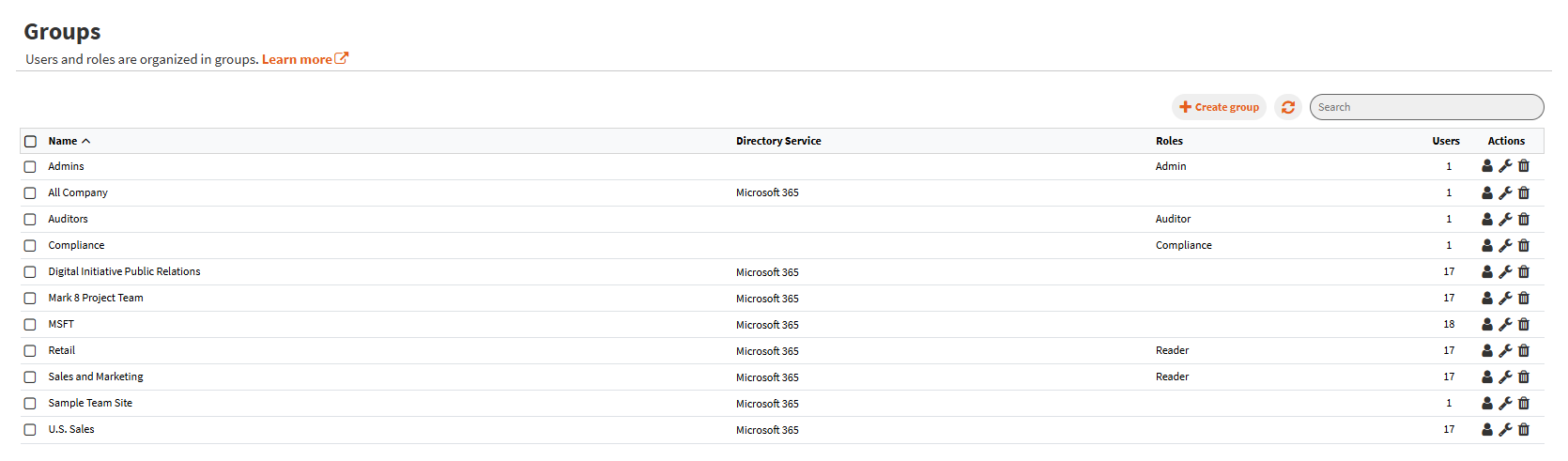
Groups are a collection of users. Groups can be created manually or synchronized from a directory service.
The Advantage of Groups in MailStore Cloud
Roles can be assigned to a group within MailStore Cloud. This gives the administrator a better overview and thus saves time.
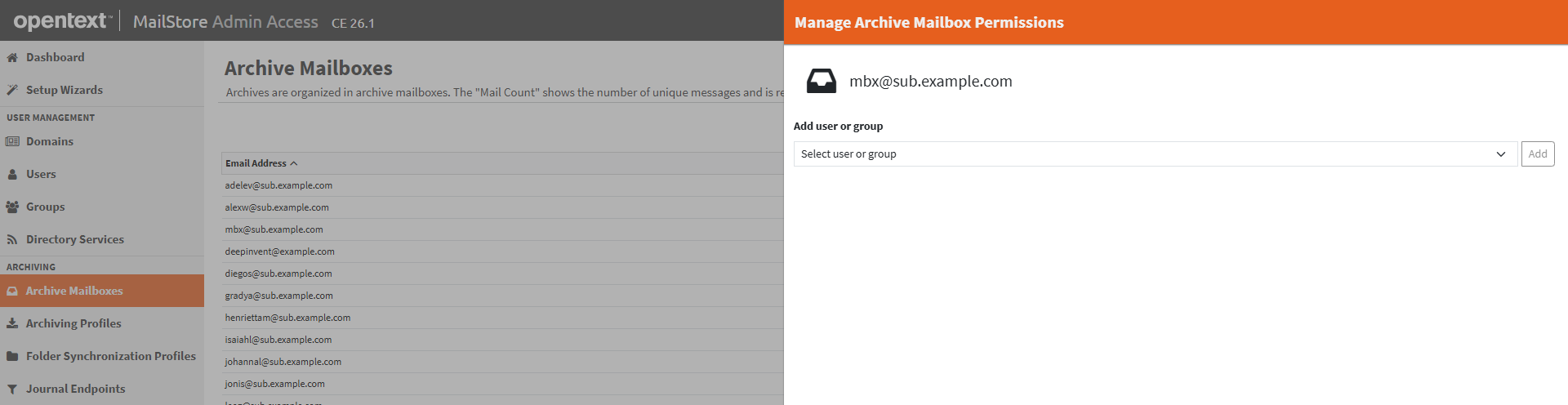
In addition, authorization must also be granted for archive mailboxes. In order to be able to read emails, both a reader role must be assigned and access rights to the archive mailbox must be granted.
For each archive mailbox, you can specify which users or user groups are allowed to access it, i.e., read it. A synchronized user has immediate access to their own archive mailboxes. Likewise, group members have direct access to synchronized group mailboxes.
Summary
The roles and, above all, the groups in MailStore Cloud greatly simplify the management of complex structures, ensure clearly separated access rights, and help companies meet a growing number of compliance requirements. They can also assist with eDiscovery scenarios.
For more details, please refer to our help.
Related posts